June 1, 2026
How to Become an Esthetician in Alabama
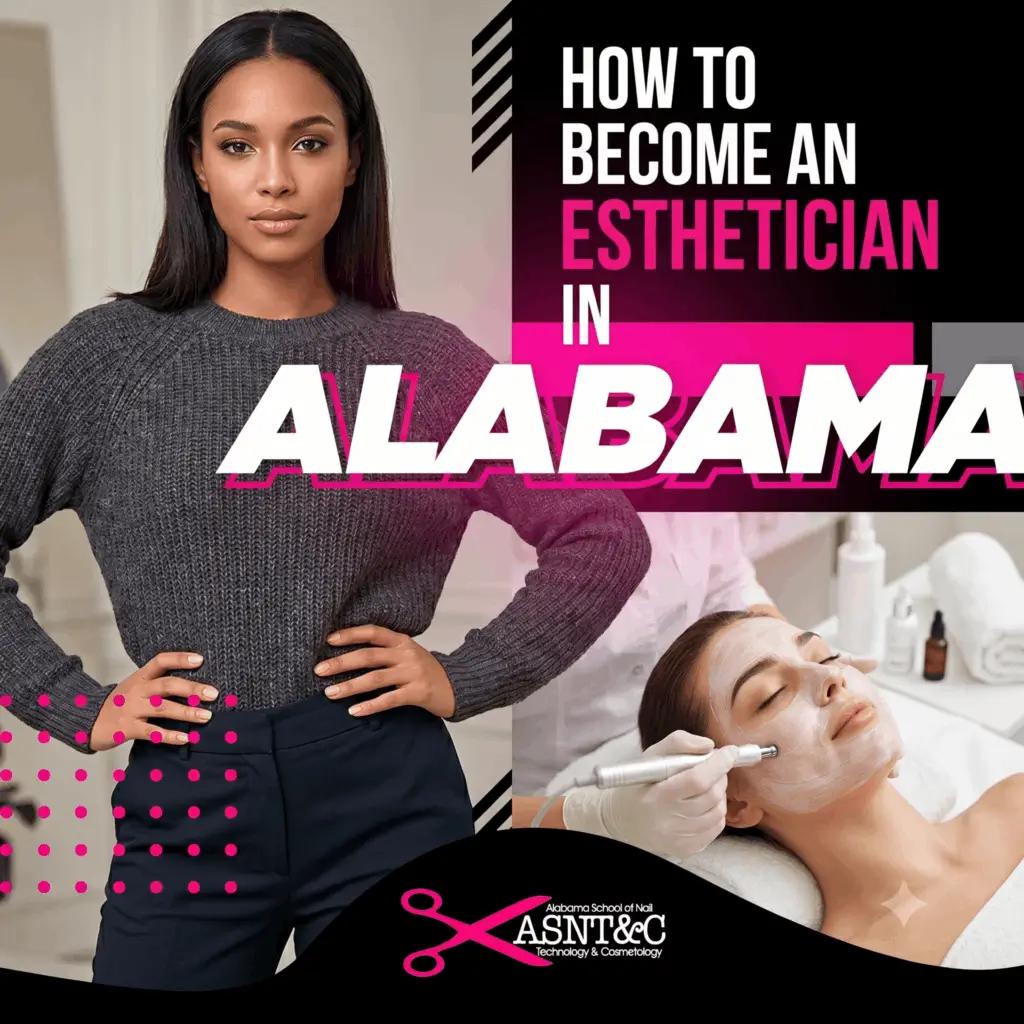
If you love skincare, beauty, wellness, and helping people feel confident, becoming an esthetician may be a great fit for you.
In Alabama, the school-training route requires 1,000 clock hours of esthetics education, followed by the state examination and licensing process. At Alabama School of Nail Technology & Cosmetology, our Esthetics program can be completed in as little as 32 weeks. Along the way, you can build skills in skincare, facials, waxing, makeup, client care, sanitation, and other areas of esthetics.
If you are wondering how to become an esthetician in Alabama, here is what you need to know about the process and what you can expect from your education.
What Does an Esthetician Do?
Estheticians are licensed skincare professionals who provide services focused on the skin, beauty, and client care.
Depending on your workplace and the services allowed within your license, you may perform:
- Facial treatments
- Acne-focused skincare services
- Waxing
- Brow and lash treatments
- Body treatments
- Enzyme masks and peels
- Microdermabrasion
- Dermaplaning
- Makeup services
- Wellness therapies
- Client consultations
One of the most important parts of esthetics is learning that every client’s skin is different. You may need to understand their concerns, look at their skin before beginning a service, and talk through what they hope to achieve.
That mix of skincare knowledge and personal interaction is one reason many people are drawn to esthetics. You get to work with your hands while also building relationships with the people you serve.
Why Do People Choose Esthetics?
Esthetics can appeal to people who enjoy skincare, creativity, wellness, and working one-on-one with others.
Some students love learning the science behind the skin. Others are excited about facials, waxing, makeup, brows, lashes, or creating a relaxing experience for clients.
Once you become licensed, you may explore opportunities in settings such as:
- Salons
- Spas
- Wellness settings
- Resorts
- Beauty retail
- Makeup counters
- Independent businesses
- Medical spa or dermatology settings, depending on the position and services performed
As you gain experience, your interests may change. You might discover that you especially enjoy skincare treatments, makeup, client education, management, product sales, or eventually operating a business.
You do not need to have your entire future mapped out before you start school. Your education gives you a chance to experience different parts of esthetics and learn what interests you most.
What Are the Requirements to Become an Esthetician in Alabama?
Alabama sets several requirements for anyone working toward an esthetician license.
Under current Alabama requirements, applicants must:
- Be at least 16 years old
- Have completed at least 10 grades of secondary school or the equivalent
- Complete the state’s required esthetics education or apprenticeship
- Complete the applicable examination and licensing requirements
The Alabama Board of Cosmetology and Barbering sets the licensing requirements. Our school also has its own admissions requirements, which we cover later in this guide.
If you are just starting to research esthetics, you do not need to understand every part of the licensing process right away. The important thing is knowing that school is one step in the process, not the license itself.
How Long Does Esthetics School Take in Alabama?
Alabama requires 1,000 clock hours of school instruction through the school-training route.
At Alabama School of Nail Technology & Cosmetology, our Esthetics program can be completed in as little as 32 weeks. Your actual completion time can depend on your schedule, attendance, and progress through the program.
Those weeks include both classroom learning and practical training. You are not simply learning how to perform a facial. You are studying the skin, practicing services, learning sanitation and safety, and developing the professional habits you can use when working with clients.
Because beauty school is measured in clock hours, consistent attendance matters. Staying on track with your schedule helps you continue progressing toward completion.
What Do You Learn in Esthetics School?
Esthetics school teaches you both the science of skincare and the techniques used to provide professional beauty services. Our curriculum includes areas such as:
- Skincare science
- Facial treatments
- Acne-focused skincare
- Body treatments
- Brow and lash treatments
- Dermaplaning
- Enzyme masks and peels
- Microdermabrasion
- Waxing
- Makeup artistry
- Wellness therapies
- Salon management
- Sanitation and safety
Rather than treating these as separate skills, your education helps you understand how they work together when serving a client.
Understanding the Skin
Before performing skincare services, you need a foundation in how the skin works. You can study skin structure, skin types, common concerns, products, and factors that may affect a service. That knowledge helps you understand why one treatment may be appropriate for one client but not another.
Performing Facial and Skincare Services
Facials involve more than following a list of steps. You may learn how to analyze the skin, select products, perform treatment techniques, and move through a service in an organized and professional way. Your training can also introduce you to techniques such as microdermabrasion, dermaplaning, enzyme masks, peels, and body treatments.
Waxing, Brows, Lashes, and Makeup
Esthetics can include services beyond traditional skincare treatments. Waxing, brow and lash services, and makeup all require attention to detail and an understanding of what your client wants. These areas also give you another way to explore your creativity while learning techniques used in the beauty industry.
Salon Safety and Sanitation
Cleanliness is part of every service you perform. You can learn how to maintain your workspace, handle tools and products properly, follow sanitation procedures, and recognize situations where a service may not be appropriate. These may not be the most glamorous parts of esthetics, but they are some of the most important habits you can develop.
Do Esthetics Students Get Hands-On Experience?
Yes. Hands-on practice gives you a chance to use what you have learned instead of only reading or hearing about it.
At our school, students train in a salon-style environment where they can practice techniques and interact with salon guests under supervision. Working with guests gives you experience that is difficult to recreate in a textbook. You can practice asking questions, managing your time, providing a service, and adjusting to different client needs.
One guest may be interested in a relaxing facial. Another may have questions about their skincare routine or want help choosing a service. Learning how to communicate while performing your technical work is part of becoming more comfortable in a salon setting.
What Role Do Your Esthetics Instructors Play?
Your instructors help you turn new information into skills you can practice. Our students learn through a combination of classroom lessons, discussions, demonstrations, practical exercises, and instructor feedback. That feedback matters because learning a technique is rarely a one-time process. You may watch an instructor demonstrate a service, try it yourself, and then make adjustments based on what you learn.
Instructors can also share insight from their experience in the beauty industry, including what it is like to work with different clients and what professional expectations may look like outside of school. You are not expected to master every service immediately. Some techniques may come naturally, while others take more repetition.
School gives you the opportunity to practice while you have instructors available to guide you.
What Happens After You Finish Esthetics School?
Finishing your education is an important milestone, but graduation does not automatically issue your Alabama esthetician license. After completing the required education, you can move into the state’s examination and licensing process.
You will need to apply for the applicable examinations, sit for the required state exams, and complete the remaining requirements established by the Alabama Board of Cosmetology and Barbering. As you get closer to graduation, we can help you understand what comes next. We also encourage students to review the Alabama Board’s current requirements because licensing rules and procedures can change.
Once you have completed the state’s requirements and your license has been issued, you can begin exploring professional opportunities within the scope of your esthetician license.
What Skills Can Help You in Esthetics?
You do not need to arrive at school with professional skincare experience, but certain qualities can help as you learn.
Curiosity
Esthetics involves science, products, techniques, and changing beauty trends. Being interested in how and why things work can make learning more enjoyable.
Attention to Detail
You are often working closely with a client’s skin, brows, lashes, or makeup. Small details can make a big difference.
Patience
Not every technique feels natural the first time you try it. Being willing to practice and accept feedback is an important part of learning.
Professionalism
Your clients are trusting you with both their skin and their experience. Being reliable, respectful, organized, and clean matters.
Comfort Working With People
Esthetics is personal. You may spend much of your day working one-on-one with someone, so being able to listen and help them feel comfortable is valuable.
You can develop many of these skills as you go. You do not need to walk into your first day already feeling like a professional esthetician.
What Do You Need to Enroll in Esthetics School?
Our admissions requirements are separate from Alabama’s minimum licensing qualifications.
Depending on your situation, you may need to provide:
- A high school transcript showing graduation, high school diploma, proof of graduation letter, or GED transcript
- Any applicable higher education transcripts
- A state-issued photo ID
- A signed Social Security card
Our admissions and enrollment team can help you understand what documentation applies to you and walk you through the enrollment process.
This is also a good time to ask practical questions. You may want to know what your schedule could look like, what supplies you need, what tuition includes, and what is expected of you as a student.
If paying for school is one of your concerns, you can also learn about our Financial Aid and payment options. Financial Aid is available to those who qualify.
Getting answers before you enroll can help you make a more informed decision about your education.
Is Esthetics School Right for You?
Esthetics may be worth exploring if you enjoy skincare, beauty, wellness, hands-on learning, and working with people.
You may especially enjoy esthetics if you:
- Like learning about skincare
- Enjoy helping people feel comfortable and confident
- Prefer hands-on learning
- Pay attention to details
- Are interested in beauty and wellness
- Like combining creativity with science
- Are willing to practice and learn from feedback
You do not need to know how to perform a facial, wax brows, analyze skin, or use professional products before starting school. Those are skills you come to school to learn.
You also do not need to decide today exactly where you want to work after becoming licensed. Start by learning about the program, asking questions, and getting a feel for what an esthetics education is actually like.
Ready to Learn More About Becoming an Esthetician in Alabama?
If skincare and esthetics sound like something you would enjoy, we would love to help you learn more. At Alabama School of Nail Technology & Cosmetology, you can learn from beauty industry professionals and build your skills through classroom and hands-on education.
Talk with our admissions team to learn about current schedules, program costs, enrollment requirements, and what you can expect as an esthetics student.
Frequently Asked Questions
Can I become an esthetician in Alabama through an apprenticeship?
Yes. Alabama offers an apprenticeship route in addition to beauty school. If you are deciding between the two, think about whether you prefer a structured school environment with instructors, classroom learning, and hands-on practice.
Do I need a high school diploma to enroll in esthetics school?
Our admissions requirements include proof of high school graduation or a GED. If you are unsure what documents you need, our admissions team can help you understand your options before you apply.
Can I transfer esthetics hours from another school?
Transfer hours may be accepted depending on your situation. If you have previous beauty-school hours, contact our admissions team before enrolling so we can help you understand what may apply.
Leave a Reply